

Used by the world's most average companies


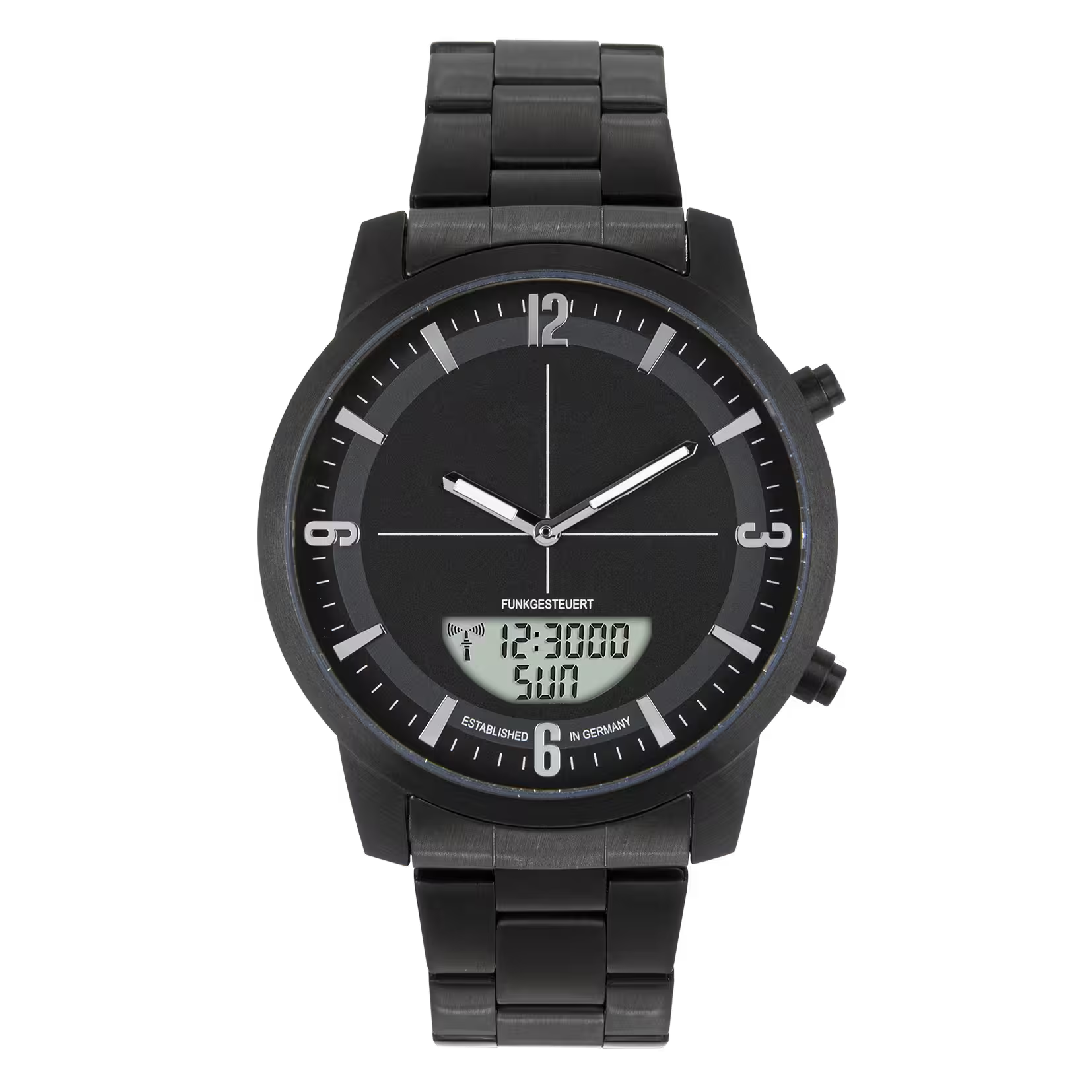
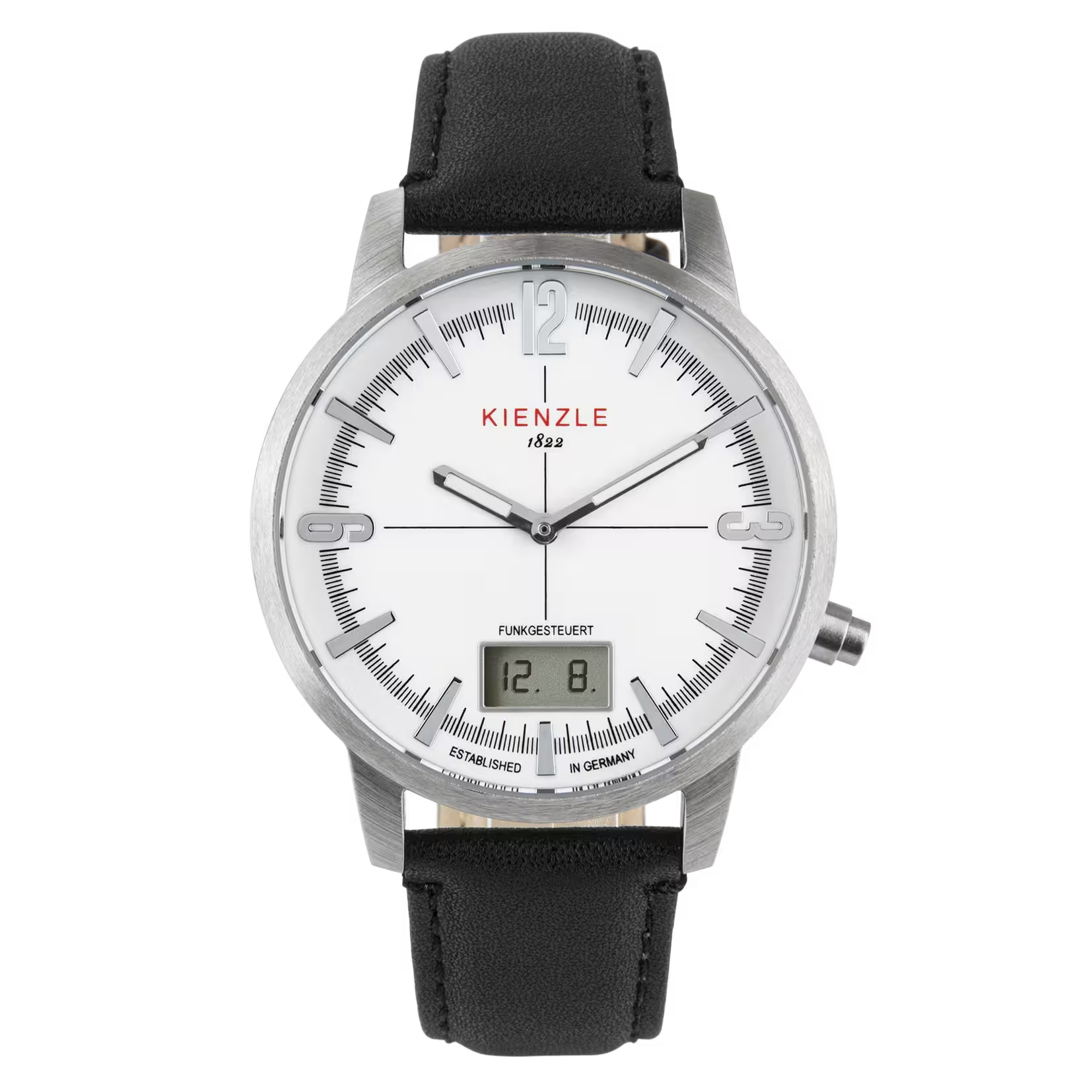
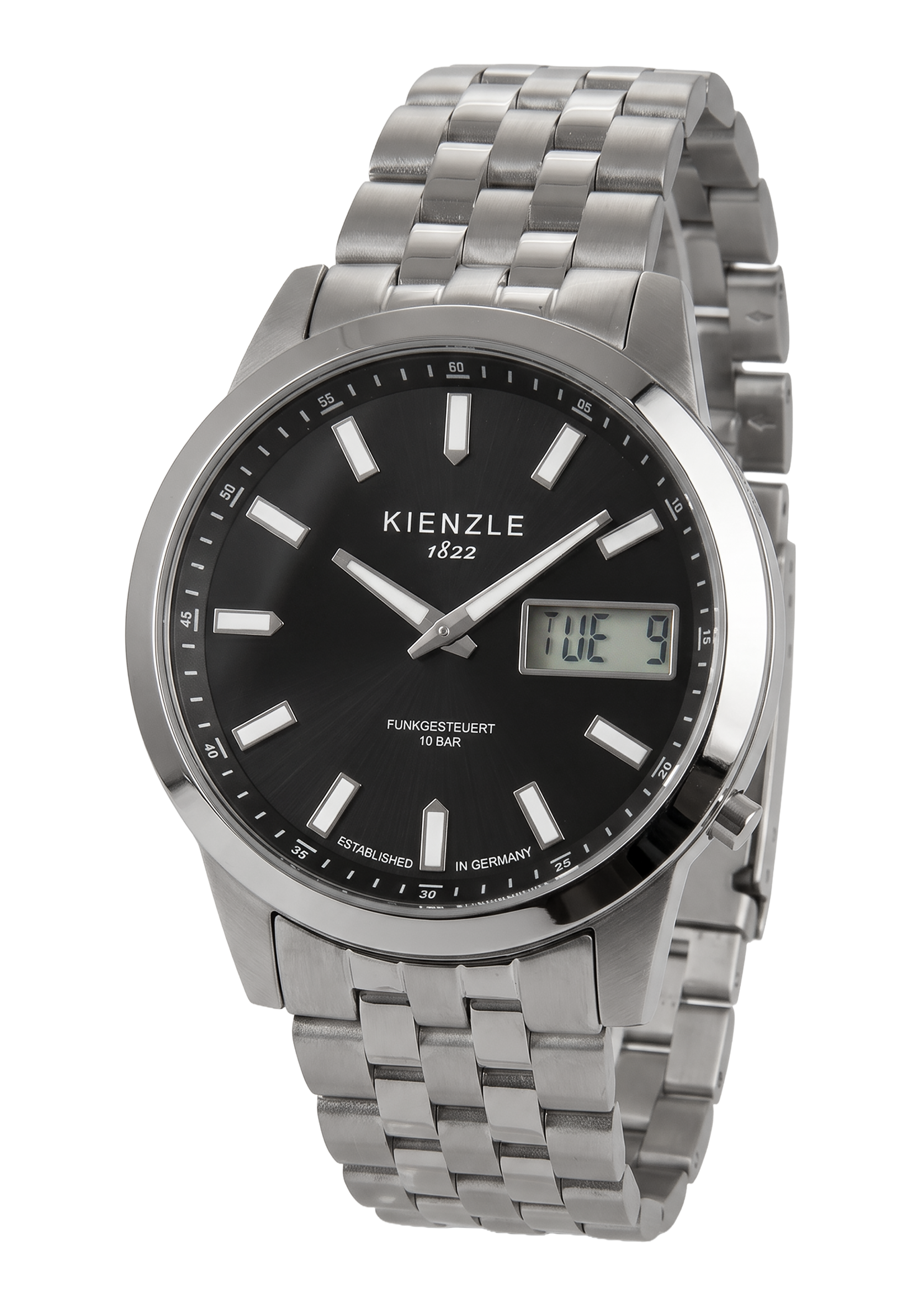
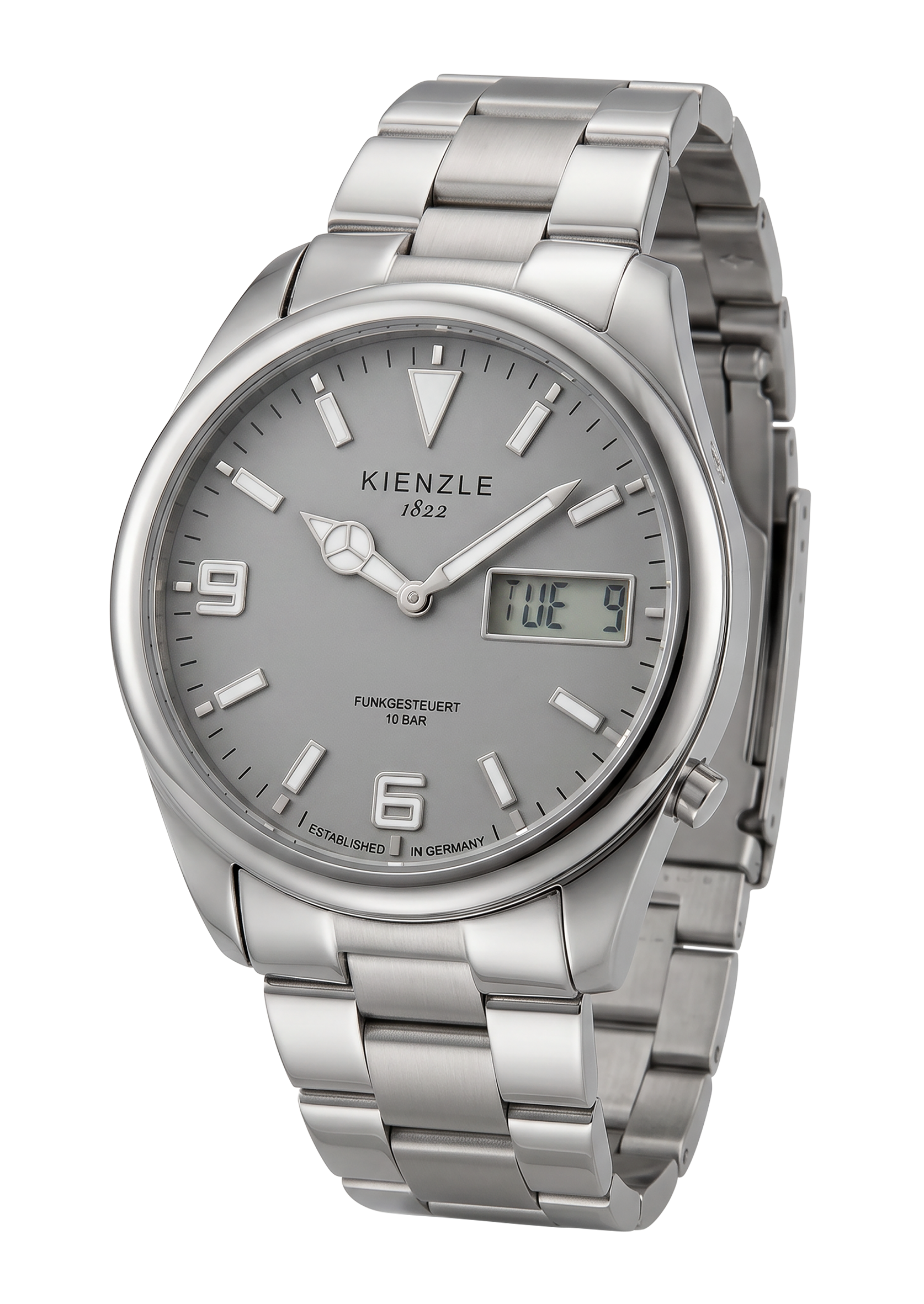
Radio-Controlled Watches
Here you can find all our radio-controlled watches at a glance.


FAQs
How does a radio-controlled watch work?
A radio-controlled watch is a quartz watch with a built-in radio receiver that automatically
synchronizes with atomic time. Kienzle 1822 radio-controlled watches receive a regular
radio signal from the atomic clock (DCF77 in Germany and large parts of Europe). This
automatically corrects the time and guarantees maximum precision – without any
manual adjustment.
How a radio-controlled watch works, step by step.
o Quartz movement as the basis
a) As with a normal quartz watch, a quartz crystal oscillator provides thetimekeeping.
b) The quartz crystal oscillates at 32,768 Hz, and these oscillations areconverted into
precise second pulses that control the hands or thedigital display.
o Radio reception
a) At regular intervals, the watch receives a radio signal from anatomic clock transmitter.
b) In Central Europe, this is usually the DCF77 signal from Mainflingen near Frankfurtam Main
(range approx. 1,500 km).
o Time synchronization
a) The radio-controlled clock compares its quartz time with the received reference time.
b) If there are deviations, it automatically adjusts itself – usually at night, wheninterference
is less likely.
o Daylight Saving Time and Standard Time
a) This information is also included in the radio signal.
b) As a result, the watch automatically switches between Daylight Saving Time and Standard Time.
o Manual setting
a) If no signal is received (e.g., in basements or abroad),the watch continues to run like a normal
quartz watch.
b) It can also be set manually.
Where do radio-controlled watches work?
Kienzle1822 radio-controlled watches use the DCF77 signal, which has a range ofup to approximately
1,500 km around Frankfurt am Main. This means they work throughout Germany, Austria, Switzerland,
and large parts of Europe. Outside this zone, they continueto function like high-quality quartz
watches and can be set manually.
For better orientation, we have prepared a graphic of the DCF77 reception area for you.
[Click here to view the graphic as a PDF]
Do I need to set the time manually?
Not in most regions of Europe. The clock automatically synchronizes with the DCF77 signal. The
time can only be set manually outside the reception range or if there is no signal.
For better orientation, we have prepared a graphic of the DCF77 reception area for you.
[Click here to view the graphic as a PDF]
How accurate is the time on a radio-controlled watch?
The radio-controlled clock deviates practically not at all from the legal time, as it receives the time
signal from the atomic clock several times a day. Without radio reception, the accuracy is
approximately ± 20 seconds per month.
How do I automatically get summer and winter time?
If the clock is within the reception range of the DCF77 signal, the time will be adjusted automatically
via the radio signal. You don't have to do anything – your clock will always show the correct time.
To help you, we have prepared a graphic showing the DCF77 reception area.
[Click here to view the graphic as a PDF]
What happens if I'm abroad with the watch?
Within the range of the DCF77 signal, synchronization works automatically. Outside this zone, the
clock continues to run like a precise quartz clock and can be manually adjusted at any time.
For better orientation, we have prepared a graphic of the DCF77 reception area for you.
[Click here to view the graphic as a PDF]
What do I do if the radio-controlled watch doesn't receive the radio signal?
Strong metal structures, electronic devices, or shielded rooms can interfere with reception. The
distance from sources of interference, such as computer screens or televisions, should be at least 1.5
to 2 meters. Avoid placing the radio-controlled watch directly on or near metal window frames. In
reinforced concrete rooms (basements, high-rise buildings, etc.), the radio signal is inevitably
weaker. In extreme cases, please place your radio-controlled watch near a window. Since there is
less atmospheric interference at night, radio reception is usually possible at this time. Generally, a
single synchronization per day is sufficient to keep the time display accurate.
What factors influence the reception of the radio signal?
Strong metal structures, electronic devices, or shielded rooms can interfere with reception. The
distance from sources of interference, such as computer screens or televisions, should be at least 1.5
to 2 meters. Avoid placing the radio-controlled wristwatch directly on or near metal window frames.
In reinforced concrete rooms (basements, high-rise buildings, etc.), the radio signal is inevitably
weaker. In extreme cases, please place your radio-controlled wristwatch near a window. Since there
is less atmospheric interference at night, radio reception is usually possible at this time. Generally, a
single synchronization per day is sufficient to keep the time display accurate.
Do I need to replace the battery in a radio-controlled watch?
Yes, as with any quartz watch, a battery change is necessary at regular intervals (usually every 1–3
years). The radio-controlled time synchronization remains active even after the battery is replaced.
Since a special tool is required to open the case back, we recommend having the battery replaced
and any necessary reset performed by a qualified professional to avoid damaging the case and
the seals.
Are radio-controlled watches also waterproof?
Yes, many Kienzle1822 radio-controlled watches offer water resistance from 3 to 10 ATM.
Please refer to the respective manual.
Do you have any further questions?
Please feel free to contact us at any time for further information.